Arizona's Vision Eye Care Center

Specialty contact lenses like orthokeratology, or ortho-k, reshape your cornea overnight so you wake up with clear vision and spend the entire day free of glasses or daytime contacts. These lenses are changing how patients in Phoenix manage nearsightedness, astigmatism, and even progressive myopia in children.
This guide explains how overnight vision correction works, which specialty lens types exist, what fitting involves, and how your optometrist and ophthalmologist each play a role in your care.
What Is Orthokeratology and How Does It Correct Vision Overnight?
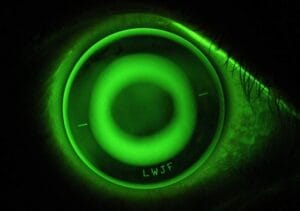
Orthokeratology is a non-surgical vision correction method that uses specially designed rigid gas permeable contact lenses worn during sleep. The lenses gently reshape the front surface of the eye, called the cornea, so light focuses correctly on the retina. When you remove the lenses in the morning, your vision is clear without any additional correction.
The concept is sometimes compared to a dental retainer for your eyes. The corneal reshaping is temporary and fully reversible. If you stop wearing the lenses, your cornea gradually returns to its original shape within a few days. This makes ortho-k an appealing option for patients who want freedom from daytime eyewear but are not ready for, or not candidates for, refractive surgery like LASIK.
Ortho-k lenses are FDA-approved for correcting mild to moderate myopia (nearsightedness). Some advanced lens designs also address low levels of astigmatism and, in certain cases, mild hyperopia (farsightedness). The treatment is available for both adults and children, though it has gained particular attention for its role in slowing myopia progression in younger patients.
How Ortho-K Lenses Reshape Your Cornea While You Sleep
Each ortho-k lens is custom-manufactured based on detailed measurements of your eye. The back surface of the lens features a precise curvature profile that applies gentle, hydraulic pressure to the central cornea through the tear film. This flattens the corneal epithelium, the outermost cell layer, by a carefully calculated amount.
The reshaping happens gradually. Most patients notice significant improvement after the first night, but it typically takes one to two weeks of consistent overnight wear for vision to stabilize at its best level throughout the full day. During this adaptation period, your eye care provider may supply temporary daytime glasses or soft lenses if needed.
The degree of correction depends on your prescription. Patients with up to approximately -6.00 diopters of myopia generally achieve good results, though outcomes vary based on corneal shape, pupil size, and individual healing response. Your optometrist evaluates all of these factors before recommending treatment.
Who Is a Good Candidate for Overnight Vision Correction?
Ortho-k works well for a broad range of patients. Good candidates typically include:
- Children and teenagers with progressing myopia, especially those whose prescriptions change every year
- Adults with mild to moderate nearsightedness who want clear daytime vision without surgery
- Athletes and active individuals who find glasses and soft contacts inconvenient or risky during sports
- Patients with dry eye symptoms aggravated by daytime contact lens wear
- People in dusty or dry environments, like parts of Phoenix, where daytime lenses can become uncomfortable
Ortho-k may not be the best fit for patients with severe myopia beyond -6.00 diopters, significant astigmatism, certain corneal conditions like keratoconus, or active eye infections. A thorough eye examination and corneal topography mapping determine whether the treatment is appropriate for your eyes.
Understanding Specialty Contact Lenses Beyond Standard Prescriptions
Standard soft contact lenses work well for many people with common refractive errors. But not every eye responds to a one-size-fits-most approach. Specialty contact lenses are designed for patients whose vision needs, corneal shape, or ocular surface conditions require a more customized solution.
These lenses are prescribed and fitted by optometrists with advanced training in contact lens design. The fitting process is more involved than picking up a box of disposable soft lenses, but the visual results and comfort improvements can be significant for the right patient.
Scleral Lenses for Irregular Corneas and Dry Eye
Scleral lenses are large-diameter rigid gas permeable lenses that vault entirely over the cornea and rest on the white part of the eye, called the sclera. Because they do not touch the cornea directly, they create a smooth optical surface over an irregular cornea and hold a reservoir of saline solution against the eye throughout the day.
This design makes scleral lenses especially effective for patients with keratoconus, pellucid marginal degeneration, corneal scarring from injury or surgery, and severe dry eye disease. The fluid reservoir continuously bathes the corneal surface, providing relief that standard drops or soft lenses cannot match.
Scleral lenses are custom-fitted using corneal and scleral topography. The fitting process may require several visits to optimize the lens shape, vault clearance, and edge alignment. Once dialed in, many patients describe scleral lenses as the most comfortable and visually sharp contact lenses they have ever worn.
Rigid Gas Permeable Lenses for Sharper Vision
Rigid gas permeable (RGP) lenses, sometimes called GP lenses, are smaller than scleral lenses and rest directly on the cornea. They provide exceptionally crisp optics because the rigid material creates a uniform refracting surface, unlike soft lenses that can flex and distort on the eye.
RGP lenses allow high oxygen transmission to the cornea, supporting long-term eye health. They are durable, easy to clean, and often last one to two years before replacement. For patients with moderate astigmatism, mild corneal irregularity, or high prescriptions, GP lenses frequently deliver better visual acuity than soft alternatives.
The initial adaptation period is the main drawback. Because the lens edge is felt on the cornea, new wearers typically need one to three weeks to become fully comfortable. Once adapted, most patients report that they forget the lenses are in.
Multifocal and Myopia Control Contact Lenses for Children
Multifocal soft contact lenses designed for myopia control use concentric ring zones with different focusing powers. The center zone corrects distance vision for clear sight, while peripheral defocus zones send a signal to the eye that may slow axial elongation, the primary mechanism behind myopia progression.
Several FDA-approved and clinically studied designs are now available for children as young as eight years old. Clinical trials published in peer-reviewed journals have demonstrated that these lenses can reduce the rate of myopia progression by roughly 50% compared to standard single-vision lenses over a three-year period.
For parents in Phoenix concerned about their child's worsening prescription, multifocal myopia control lenses offer a daily-wear alternative to overnight ortho-k. Your optometrist can help determine which approach, or combination of approaches, best fits your child's age, prescription, lifestyle, and compliance level.
Invisalens and Ortho-K for Myopia Management in Children
Myopia management has become one of the most important areas of pediatric eye care. The goal is not just to correct a child's current prescription but to slow down how quickly the eye elongates, reducing the risk of high myopia and its associated complications later in life, including retinal detachment, glaucoma, and myopic macular degeneration.
Ortho-k lenses are one of the most well-researched tools for myopia control. Because the lenses are worn only at night and removed in the morning, children go through their school day and activities without any eyewear. This eliminates concerns about lost glasses, broken frames, or contact lens handling in a classroom setting.
Why Childhood Myopia Is Increasing in Phoenix
Myopia rates among children have risen sharply over the past two decades. Increased screen time, reduced outdoor activity, and prolonged near-work during school years all contribute to the trend. Phoenix families are not immune. Despite abundant sunshine, many children spend the majority of their day indoors with digital devices, textbooks, and close-focus tasks.
Research from the American Academy of Ophthalmology estimates that nearly half of the global population could be myopic by 2050 if current trends continue. Early intervention during the years of fastest eye growth, typically between ages six and fourteen, offers the greatest opportunity to change a child's visual trajectory.
Routine pediatric eye exams are the first step. If your child's prescription is increasing by -0.50 diopters or more per year, a conversation about myopia management strategies is warranted.
How Overnight Lenses Slow Myopia Progression
The mechanism behind ortho-k's myopia control effect relates to peripheral retinal defocus. Standard glasses and soft lenses correct central vision but allow light to focus behind the peripheral retina, which may stimulate the eye to continue growing longer. Ortho-k reshapes the cornea in a way that shifts peripheral light focus in front of the retina, reducing the growth signal.
Multiple longitudinal studies have shown that ortho-k can slow axial eye growth by approximately 40% to 60% compared to children wearing glasses alone. The effect is most pronounced when treatment begins early and continues through the peak growth years.
Compliance is critical. The lenses must be worn every night, cleaned properly, and monitored with regular follow-up visits. Parents play an essential role in helping younger children establish a consistent lens care routine. Your optometrist provides detailed training and ongoing support to make the process manageable.
What to Expect During a Specialty Contact Lens Fitting
A specialty contact lens fitting is more comprehensive than a standard contact lens evaluation. The process involves advanced diagnostic imaging, precise measurements, trial lens assessments, and follow-up visits to ensure optimal fit, comfort, and visual performance.
Understanding what to expect helps reduce anxiety and sets realistic timelines. Most specialty fittings require two to four office visits before the final lenses are dispensed.
Corneal Topography and Eye Measurements
The fitting begins with corneal topography, a non-invasive imaging technique that maps the curvature and elevation of your entire corneal surface. The resulting color-coded map reveals subtle irregularities, steep or flat zones, and asymmetries that influence lens design.
For scleral lenses, additional scleral topography or profilometry may be performed to capture the shape of the white part of the eye where the lens will rest. Measurements of pupil size, tear film quality, corneal diameter, and anterior chamber depth round out the data set.
Your optometrist uses this information to order or design a custom lens with the correct base curve, diameter, power, and edge profile. For ortho-k, the topography data also determines the target reshaping zone and the amount of corneal flattening needed to achieve your prescription correction.
Follow-Up Care and Lens Adjustments
After receiving your lenses, you return for a follow-up visit, typically within one week. Your provider evaluates the lens fit under a slit-lamp microscope, checks for adequate tear exchange beneath the lens, and assesses your visual acuity with the lenses on (for scleral or GP lenses) or after overnight wear (for ortho-k).
Adjustments are common and expected. A slight modification to the lens curvature, diameter, or edge design can make a meaningful difference in comfort and performance. Additional follow-ups are scheduled at one month, three months, and then every six months for ongoing monitoring.
For ortho-k patients, morning topography maps are compared to baseline to confirm that the cornea is reshaping as planned. Your provider tracks these changes over time to ensure stable, predictable results.
Benefits and Limitations of Sleeping in Vision-Correcting Lenses
Overnight vision correction offers genuine advantages, but it is not without trade-offs. Understanding both sides helps you make an informed decision about whether this approach fits your lifestyle and visual needs.
Daytime Freedom from Glasses and Contacts
The most immediate benefit is waking up with clear vision. Ortho-k patients can go through their entire day, from morning routines to work, exercise, and evening activities, without reaching for glasses or inserting contact lenses. For children, this means uninterrupted play and sports. For adults, it means freedom during swimming, hiking in the Arizona heat, or simply not worrying about dry, irritated lenses by the end of a long day.
This freedom is especially valued by patients who have struggled with contact lens discomfort in Phoenix's arid climate. Daytime dryness, dust, and air conditioning can make conventional soft lenses uncomfortable by mid-afternoon. Ortho-k sidesteps the problem entirely because no lens is worn during waking hours.
The visual correction is also reversible. Unlike LASIK, which permanently alters corneal tissue, ortho-k allows you to stop treatment at any time and return to your previous prescription. This reversibility appeals to patients who want a non-surgical option or who may consider refractive surgery later.
Safety Considerations and Proper Lens Hygiene
Sleeping in any contact lens carries a slightly elevated risk of microbial keratitis, a corneal infection. However, ortho-k lenses are made from highly oxygen-permeable materials specifically approved for overnight wear, and the risk is comparable to that of extended-wear soft lenses when proper hygiene is followed.
Key safety practices include:
- Washing and drying hands thoroughly before handling lenses
- Using only the recommended cleaning and disinfecting solutions (never tap water)
- Replacing lens cases regularly, at least every three months
- Attending all scheduled follow-up appointments
- Removing lenses and contacting your eye care provider immediately if you experience redness, pain, light sensitivity, or discharge
Parents supervising children's ortho-k use should assist with lens insertion, removal, and cleaning until the child demonstrates consistent, independent technique. Your optometrist will assess readiness and provide hands-on training during the fitting process.
When to See an Optometrist vs. an Ophthalmologist for Specialty Lenses
Patients and parents sometimes wonder which type of eye care professional handles specialty contact lenses. Understanding the distinct roles of optometrists and ophthalmologists helps you navigate the care pathway with confidence.
The Optometrist's Role in Contact Lens Fitting and Management
Optometrists are the primary providers for contact lens prescriptions, fittings, and ongoing management. This includes standard soft lenses, rigid gas permeable lenses, scleral lenses, ortho-k, and myopia control lenses. Optometrists complete four years of doctoral-level training in optometry school after undergraduate education, with extensive coursework and clinical rotations in contact lens design and fitting.
At Arizona's Vision Eye Care Center, our optometrists use advanced corneal imaging technology to design and fit specialty lenses for patients of all ages. We manage the entire process from initial evaluation through long-term follow-up, adjusting lens parameters as your eyes change over time.
If you are considering ortho-k for your child or specialty lenses for a complex corneal condition, your optometrist is the right starting point. We evaluate your candidacy, explain your options, and guide you through every step.
When a Referral to Ophthalmology May Be Needed
Ophthalmologists are medical doctors who specialize in eye surgery and the treatment of eye diseases. While they do not typically perform contact lens fittings, there are situations where coordination between your optometrist and an ophthalmologist is important.
If a specialty lens fitting reveals an underlying corneal disease that requires surgical intervention, such as advanced keratoconus needing corneal cross-linking or a corneal transplant, your optometrist will refer you to a trusted ophthalmologist. Similarly, if a patient develops a complication like a corneal ulcer that does not respond to initial treatment, co-management with an ophthalmologist ensures the best outcome.
This collaborative approach means you always receive the right level of care at the right time. Your optometrist coordinates referrals, shares imaging and clinical data, and continues managing your contact lens needs after any surgical treatment is complete.
Specialty Contact Lens Options Available in Phoenix, AZ
Phoenix's dry desert climate, intense UV exposure, and active outdoor lifestyle create unique demands on vision correction. Specialty contact lenses address these challenges in ways that standard eyewear often cannot.
Local access to experienced specialty lens providers matters. Ortho-k and scleral lens fittings require in-person diagnostic imaging, trial lens evaluations, and multiple follow-up visits. Choosing a provider close to home in the Phoenix metro area makes the process more convenient and ensures timely care if adjustments or urgent visits are needed.
Finding a Qualified Provider for Ortho-K and Specialty Fittings
Not every eye care office offers specialty contact lens services. When evaluating providers, look for:
- An optometrist with specific training or certification in orthokeratology and specialty lens fitting
- In-office corneal topography and scleral imaging technology
- Experience fitting pediatric patients for myopia control lenses
- A clear follow-up schedule and emergency contact protocol
- Willingness to explain the fitting process, expected timeline, and costs upfront
Arizona's Vision Eye Care Center provides comprehensive specialty contact lens services for patients throughout Phoenix and the surrounding communities. Our team fits ortho-k lenses, scleral lenses, GP lenses, and multifocal myopia control lenses, supported by advanced diagnostic equipment and a patient-centered approach to every fitting.
If you have been told that contact lenses will not work for your eyes, or if your child's myopia is progressing faster than expected, a specialty lens consultation may reveal options you did not know existed.
Conclusion
Ortho-k and specialty contact lenses give patients a powerful, non-surgical path to clearer vision, whether the goal is daytime freedom from eyewear, managing a complex corneal condition, or slowing a child's myopia progression.
These advanced lens options work best with expert fitting, consistent follow-up, and a provider who understands both the technology and your individual needs. The right care makes all the difference.
We invite you to schedule a specialty contact lens consultation at Arizona's Vision Eye Care Center in Phoenix. Our team is ready to help you see clearly, comfortably, and confidently.
Frequently Asked Questions
Is it safe to sleep in ortho-k contact lenses every night?
Yes. Ortho-k lenses are made from high-oxygen-permeable materials FDA-approved for overnight wear. Following proper cleaning and hygiene protocols keeps risk low and comparable to extended-wear soft lenses.
How long does it take for ortho-k to fully correct my vision?
Most patients notice improved vision after the first night. Full, stable correction throughout the entire day typically develops within one to two weeks of consistent nightly wear.
Can children wear ortho-k lenses for myopia control?
Yes. Ortho-k is one of the most effective myopia management tools for children. Clinical studies show it can slow myopia progression by roughly 40% to 60% when started during peak growth years.
What happens if I stop wearing ortho-k lenses?
Your cornea gradually returns to its original shape within a few days, and your previous prescription comes back. The treatment is fully reversible with no permanent changes to the eye.
Are scleral lenses comfortable to wear all day?
Most patients find scleral lenses very comfortable because the lens vaults over the cornea without touching it. The saline reservoir underneath also keeps the eye hydrated, which is especially helpful in Phoenix's dry climate.
How much do specialty contact lenses cost compared to regular contacts?
Specialty lenses involve higher upfront costs due to custom manufacturing and the advanced fitting process. However, many patients find the investment worthwhile given the superior vision, comfort, and long-term eye health benefits.
Do I still need regular eye exams if I wear ortho-k lenses?
Absolutely. Regular comprehensive eye exams monitor your overall eye health, track prescription stability, and ensure the lenses continue fitting properly. Follow-up visits are a required part of ortho-k care.
Can ortho-k correct astigmatism?
Some ortho-k lens designs can correct low to moderate levels of astigmatism. Your optometrist evaluates your corneal topography to determine whether your astigmatism falls within the treatable range.
What is the difference between ortho-k and LASIK?
Ortho-k reshapes the cornea temporarily using a contact lens worn overnight. LASIK permanently reshapes the cornea with a laser. Ortho-k is reversible, non-surgical, and available to children, while LASIK is a one-time surgical procedure for adults.
How do I know if specialty contact lenses are right for me or my child?
A specialty contact lens consultation with an experienced optometrist is the best starting point. Corneal topography, a thorough eye exam, and a discussion of your visual goals help determine which lens type fits your needs.
