Arizona's Vision Eye Care Center

Smoking doubles your risk of vision loss and directly damages every structure in your eyes. Cigarette smoke contains over 7,000 chemicals that attack delicate eye tissues. These toxins reduce blood flow, starve cells of oxygen, and accelerate aging in ways that lead to serious eye diseases. Phoenix residents who smoke face higher rates of cataracts, macular degeneration, and diabetic eye complications.
Your eyes need protection now more than ever. Smoking-related eye damage often develops silently over years. By the time symptoms appear, permanent vision loss may have already occurred.
In this blog, we will explain how smoking harms your eyes and what you can do to protect your vision. You will learn which eye conditions smoking causes, warning signs to watch for, and steps to prevent further damage.
The Science Behind the Damage
Cigarette smoke creates a toxic environment that your eyes cannot escape. Every puff delivers harmful chemicals directly into your bloodstream. These substances travel to your eyes within seconds. The delicate blood vessels and tissues in your eyes have no defense against this chemical assault.
Your eyes depend on a constant supply of clean, oxygen-rich blood. Smoking disrupts this supply chain at multiple points. Blood vessels constrict and narrow. Oxygen levels drop. Protective antioxidants get depleted faster than your body can replace them.
The damage compounds over time. Each cigarette adds to the cumulative harm. Your eyes age faster than they should. Diseases that might develop in your 70s can appear in your 50s instead.
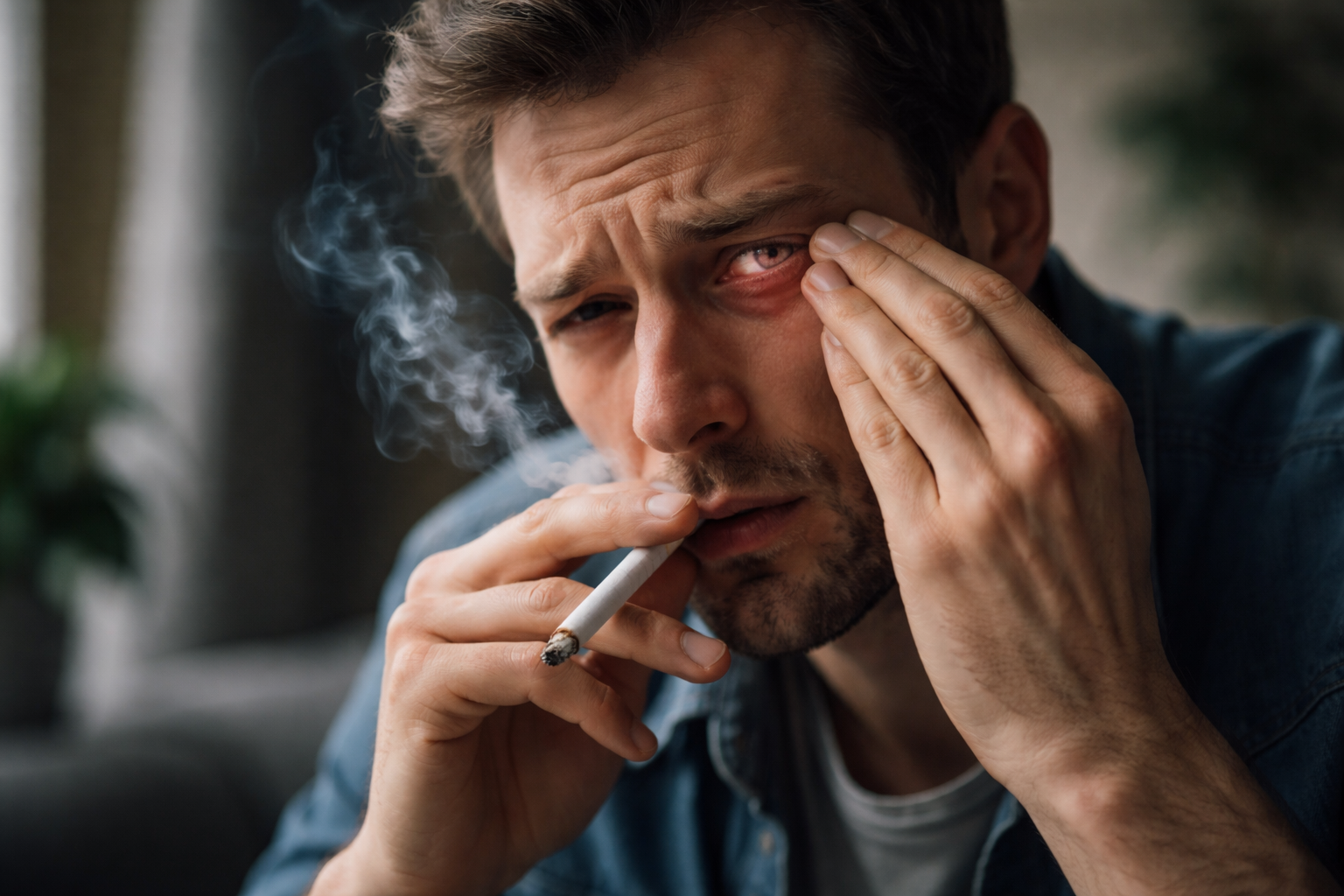
How Smoking Harms Your Eyes
Understanding the mechanisms of damage helps explain why smoking affects so many different eye conditions. Three main pathways cause the most harm to your vision.
Toxin Absorption
Your eyes absorb cigarette toxins through two routes. Smoke particles land directly on your eye surface. Chemicals also reach your eyes through your bloodstream. Heavy metals like lead and cadmium accumulate in eye tissues. Formaldehyde irritates and damages the cornea. Ammonia burns sensitive membranes. These toxins break down cellular structures that keep your eyes healthy.
Reduced Oxygen and Nutrients
Smoking causes blood vessels to constrict throughout your body. Your eyes suffer because they need constant blood flow. The retina requires more oxygen per gram than any other tissue. Carbon monoxide from smoke binds to red blood cells. This reduces their ability to carry oxygen by up to 15%. Your eyes slowly starve from lack of nutrients.
Oxidative Stress
Cigarette smoke floods your body with free radicals. These unstable molecules damage cells and DNA. Your eyes normally use antioxidants like vitamin C to neutralize free radicals. Smoking depletes these protective compounds rapidly. The lens, retina, and optic nerve all suffer oxidative damage. This accelerates aging and disease progression in your eyes.
Eye Diseases Associated with Smoking
Research confirms strong links between smoking and multiple eye diseases. The American Academy of Ophthalmology reports that smokers face significantly higher risks for nearly every major eye condition. Some diseases show dose-dependent relationships. The more you smoke, the greater your risk becomes.
Smoking does not just cause new diseases. It makes existing conditions worse and harder to treat. Patients who smoke often respond poorly to eye treatments. Their conditions progress faster than non-smokers with the same diagnosis.
At Arizona's Vision Eye Care Center, we see these patterns regularly in our Phoenix patients. Early detection through comprehensive eye exams helps identify smoking-related damage before vision loss occurs.
Key Eye Conditions Worsened by Smoking
Seven major eye conditions have documented connections to smoking. Understanding each one helps you recognize warning signs and seek appropriate care.
Age-Related Macular Degeneration (AMD)
AMD destroys central vision needed for reading, driving, and recognizing faces. Smokers develop AMD two to four times more often than non-smokers. The macula contains high concentrations of protective pigments. Smoking depletes these pigments and damages the underlying support cells. Wet AMD, the more severe form, progresses faster in smokers. Quitting reduces your risk, though it takes years to approach non-smoker levels.
Cataracts
Cataracts cloud your eye's natural lens and blur vision. Smoking increases cataract risk by two to three times. The toxins in smoke directly damage lens proteins. Oxidative stress accelerates the clouding process. Smokers often develop cataracts 10 years earlier than non-smokers. Nuclear cataracts, which affect the lens center, show the strongest link to smoking.
Diabetic Retinopathy
Diabetes damages blood vessels throughout your body. Your retina's tiny vessels are especially vulnerable. Smoking makes diabetic retinopathy worse through multiple mechanisms. Blood vessel damage accelerates. Oxygen delivery decreases further. Inflammation increases. Diabetic smokers face much higher rates of vision-threatening complications. Strict blood sugar control helps less when smoking continues.
Glaucoma
Glaucoma damages the optic nerve and causes permanent peripheral vision loss. Smoking increases eye pressure and reduces blood flow to the optic nerve. Both factors contribute to glaucoma progression. Studies show smokers have higher rates of glaucoma than non-smokers. The damage happens gradually without symptoms until significant vision loss occurs.
Dry Eye Syndrome
Smoke irritates your eyes directly and disrupts tear production. Smokers experience dry eye symptoms more frequently and severely. The tear film breaks down faster. Inflammation increases on the eye surface. Meibomian glands that produce tear oils become blocked. Chronic dry eye causes discomfort and can damage your cornea over time.
Thyroid Eye Disease (TED)
TED causes inflammation and swelling around the eyes. Smoking dramatically worsens this autoimmune condition. Smokers with Graves' disease develop eye involvement more often. Their symptoms become more severe. Treatment works less effectively. Quitting smoking is essential for managing TED successfully.
Color Vision Deficiency
Long-term smoking can affect your ability to distinguish colors. The optic nerve and retinal cells that process color information suffer damage. Heavy smokers show measurable changes in color perception. Blue-yellow discrimination often declines first. These changes may indicate broader damage to your visual system.
Key Takeaways
- Smoking doubles or triples your risk for most major eye diseases
- Toxins reach your eyes through smoke exposure and bloodstream absorption
- Reduced oxygen and nutrients starve delicate eye tissues
- AMD, cataracts, and diabetic retinopathy show strongest smoking links
- Damage accumulates over years before symptoms appear
- Quitting smoking reduces risk, though recovery takes time
- Regular eye exams detect smoking-related damage early
How Can You Prevent Vision Loss Related to Smoking?
Prevention starts with understanding your personal risk factors. Schedule a comprehensive eye exam to establish your baseline eye health. Your eye care provider can identify early signs of smoking-related damage. Early detection allows for earlier intervention.
Protect your eyes from secondhand smoke exposure. Even non-smokers face increased eye disease risk from environmental smoke. Wear wraparound sunglasses outdoors to shield your eyes. Choose smoke-free environments whenever possible.
Support your eye health with proper nutrition. Leafy greens, colorful vegetables, and omega-3 fatty acids help protect your eyes. These nutrients cannot overcome smoking damage but provide some protection. Stay hydrated to support healthy tear production.
Get regular eye exams based on your age and risk factors. Adults over 40 should have comprehensive exams every one to two years. Smokers and former smokers may need more frequent monitoring. Our Phoenix team at Arizona's Vision Eye Care Center creates personalized screening schedules for each patient.
Quit Smoking to Protect Your Eyesight
Quitting smoking remains the single most effective way to protect your vision. Your eyes begin healing within hours of your last cigarette. Blood flow improves. Oxygen levels increase. Antioxidant levels start recovering.
The benefits continue growing over time. After five years, your cataract risk drops significantly. AMD risk decreases gradually over 10 to 20 years. Your eyes may never fully return to non-smoker status, but every smoke-free day helps.
Talk to your doctor about smoking cessation resources. Nicotine replacement therapy, prescription medications, and counseling all improve quit rates. Many Phoenix residents find success with combination approaches. Your eye care provider can reinforce the importance of quitting at every visit.
Conclusion
Smoking causes serious, lasting damage to your eyes through toxin exposure, oxygen deprivation, and oxidative stress. Protecting your vision requires understanding these risks and taking action.
Arizona's Vision Eye Care Center provides comprehensive eye exams that detect smoking-related damage early. Our Phoenix team helps patients understand their eye health and coordinates care with specialists when needed.
We encourage you to schedule an eye exam and discuss your vision concerns with our team. Your eyesight deserves protection, and we are here to help you preserve it.
FAQs
How quickly does smoking damage your eyes?
Smoking begins affecting your eyes immediately through direct irritation and reduced oxygen. Cumulative damage builds over months and years. Most smoking-related eye diseases develop after decades of exposure.
Can your eyes heal after you quit smoking?
Yes, your eyes begin recovering after you quit. Blood flow improves within days. Long-term disease risks decrease over years. Some damage may be permanent, but quitting prevents further harm.
Does secondhand smoke affect eye health?
Secondhand smoke increases eye disease risk and causes immediate irritation. Children exposed to household smoke show higher rates of eye problems. Avoiding smoke exposure protects your eyes.
How often should smokers get eye exams?
Smokers should have comprehensive eye exams annually or as recommended by their eye care provider. More frequent monitoring helps detect problems early when treatment works best.
Can smoking cause blindness?
Yes, smoking can lead to blindness through AMD, glaucoma, and diabetic retinopathy. These conditions cause permanent vision loss when untreated. Early detection and quitting smoking reduce blindness risk.
Do e-cigarettes harm your eyes too?
E-cigarettes contain nicotine and other chemicals that may harm your eyes. Research on vaping and eye health continues. The safest choice is avoiding all tobacco and nicotine products.
What eye symptoms should smokers watch for?
Watch for blurry vision, difficulty seeing at night, blind spots, and color changes. Dry, irritated eyes and frequent headaches also warrant attention. Report any vision changes to your eye care provider promptly.
