Arizona's Vision Eye Care Center

Dry eye disease affects nearly 16 million diagnosed Americans, and millions more experience symptoms without knowing the cause. Living in Phoenix's arid desert climate puts your eyes under constant stress from low humidity, dust, and intense sun exposure.
This guide walks you through what causes dry eye, how to recognize the symptoms early, and every treatment option available, from simple at-home remedies to the most advanced in-office therapies. You will also learn when your optometrist can manage your dry eye and when a referral to an ophthalmologist makes sense.
What Is Dry Eye Disease?
Dry eye disease is a chronic condition where your eyes do not produce enough tears or produce tears that evaporate too quickly. The result is persistent discomfort, visual disturbance, and potential damage to the surface of your eye. It is one of the most common reasons patients visit an eye care provider, and it ranges from mild irritation to a condition that significantly affects daily life.
Dry eye is not just about feeling like your eyes are “dry.” It involves inflammation of the ocular surface, instability of the tear film, and changes to the glands responsible for tear production. Without proper treatment, chronic dry eye can lead to corneal abrasion, infection, and long-term vision problems.
How Your Tear Film Works
Your tear film is a thin, three-layered coating that protects and nourishes the front surface of your eye. The outermost lipid (oil) layer, produced by the meibomian glands in your eyelids, prevents tears from evaporating too fast. The middle aqueous (water) layer, secreted by the lacrimal glands, provides moisture, oxygen, and nutrients. The innermost mucin layer helps tears spread evenly across the cornea.
When any of these three layers is compromised, the tear film breaks down. Your eyes lose their protective barrier, and you start experiencing the burning, stinging, and blurred vision associated with dry eye disease.
Aqueous-Deficient vs. Evaporative Dry Eye
There are two primary types of dry eye, and understanding which type you have determines the most effective treatment path.
Aqueous-deficient dry eye occurs when your lacrimal glands do not produce enough of the watery component of tears. This type is less common and is often associated with autoimmune conditions like Sjogren's syndrome, rheumatoid arthritis, or lupus.
Evaporative dry eye accounts for the majority of cases, roughly 86% of all dry eye diagnoses according to clinical research. It happens when the meibomian glands become blocked or dysfunctional, reducing the oil layer and allowing tears to evaporate too rapidly. In Phoenix's dry heat, evaporative dry eye is especially prevalent.
Some patients have a combination of both types, which is called mixed-mechanism dry eye. A thorough evaluation by your eye care provider can determine your specific type and guide treatment decisions.
Common Causes of Dry Eye
Dry eye rarely has a single cause. It typically results from a combination of environmental exposure, biological factors, and daily habits that disrupt tear production or tear film stability.
Environmental and Lifestyle Factors in Phoenix
Phoenix presents a unique challenge for eye health. The Sonoran Desert climate means average humidity levels often drop below 20% during much of the year. Combine that with temperatures exceeding 100°F for months at a time, frequent dust storms, and high UV exposure, and you have an environment that accelerates tear evaporation.
Air conditioning, which runs almost continuously in Phoenix homes and offices, further reduces indoor humidity. Ceiling fans and car air vents directed toward the face compound the problem. Even outdoor activities like hiking, golfing, or cycling expose your eyes to wind and particulate matter that destabilize the tear film.
If you spend significant time outdoors in the Valley, wraparound sunglasses and preservative-free lubricating drops can make a meaningful difference.
Age, Hormones, and Systemic Health Conditions
Dry eye becomes more common with age. Tear production naturally declines as you get older, and the meibomian glands can atrophy over time. People over 50 are at significantly higher risk.
Hormonal changes play a major role, particularly for women. Menopause, pregnancy, and the use of oral contraceptives can all reduce tear production. Women are nearly twice as likely as men to develop dry eye disease.
Systemic health conditions also contribute. Diabetes, thyroid disorders, rheumatoid arthritis, Sjogren's syndrome, and lupus are all associated with chronic dry eye. Patients managing these conditions should discuss dry eye screening with their eye care provider.
Medications and Digital Screen Use
Several common medications list dry eye as a side effect. Antihistamines, decongestants, blood pressure medications, antidepressants, and hormone replacement therapy can all reduce tear production or alter tear composition.
Digital screen use is one of the fastest-growing contributors to dry eye, especially among younger patients. When you focus on a screen, your blink rate drops by as much as 66%. Incomplete blinks fail to spread the tear film evenly, and the oil layer breaks down faster. For Phoenix residents who work remotely or spend hours on devices, this is a significant and often overlooked factor.
The 20-20-20 rule helps: every 20 minutes, look at something 20 feet away for 20 seconds. It sounds simple, but it gives your tear film a chance to recover.
Recognizing Dry Eye Symptoms
Dry eye symptoms vary widely from person to person. Some patients experience mild, occasional discomfort. Others deal with persistent pain that interferes with reading, driving, and screen work.
Early Warning Signs
The most common early symptoms of dry eye include:
- A gritty or sandy sensation, as if something is stuck in your eye
- Burning or stinging that worsens throughout the day
- Redness, especially after prolonged screen use or outdoor exposure
- Watery eyes (a reflex response to dryness that produces low-quality tears)
- Blurred vision that temporarily clears after blinking
- Eye fatigue, particularly in the afternoon or evening
- Sensitivity to light or wind
- Difficulty wearing contact lenses comfortably
Many patients dismiss these symptoms as “tired eyes” or seasonal allergies. If you notice these signs recurring, especially in Phoenix's dry climate, a comprehensive eye exam can determine whether dry eye disease is the cause.
When Symptoms Signal a More Serious Condition
Not all eye discomfort is simple dry eye. Certain symptoms warrant prompt evaluation because they may indicate corneal damage, infection, or an underlying autoimmune condition.
See your eye care provider promptly if you experience severe eye pain that does not improve with lubricating drops, sudden vision changes, discharge or crusting that suggests infection, or persistent redness that worsens over days. These symptoms may require prescription treatment, specialized testing, or a referral to an ophthalmologist for further evaluation.
Early intervention prevents complications. Chronic, untreated dry eye can cause corneal scarring, ulceration, and permanent vision changes.
How Dry Eye Is Diagnosed
Diagnosing dry eye goes beyond asking about symptoms. Your eye care provider uses a combination of patient history, clinical observation, and specialized tests to identify the type and severity of your condition.
Comprehensive Eye Exam and Tear Film Evaluation
A dry eye evaluation typically begins during a comprehensive eye exam. Your optometrist will ask about your symptoms, their duration, and any factors that make them better or worse. They will review your medications, health history, and daily habits, including screen time and environmental exposure.
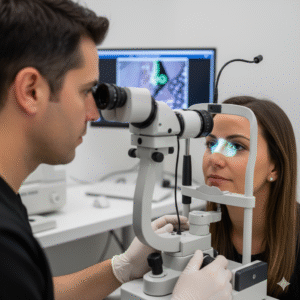
Using a slit-lamp biomicroscope, your provider examines the surface of your cornea, conjunctiva, and eyelids for signs of inflammation, meibomian gland blockage, and tear film irregularity. Fluorescein dye may be applied to highlight areas of corneal damage or dryness that are invisible to the naked eye.
Advanced Diagnostic Tools
For patients with moderate to severe symptoms, advanced diagnostic tools provide more precise data.
Tear breakup time (TBUT) measures how quickly your tear film destabilizes after a blink. A breakup time under 10 seconds is considered abnormal.
Schirmer's test uses a small strip of filter paper placed inside the lower eyelid to measure tear production volume over five minutes.
Meibography uses infrared imaging to photograph the meibomian glands and assess their structure. This test reveals gland dropout or atrophy that contributes to evaporative dry eye.
Tear osmolarity testing measures the salt concentration in your tears. Elevated osmolarity is a reliable biomarker for dry eye disease and helps track treatment response over time.
These diagnostic tools allow your provider to create a targeted treatment plan rather than relying on a one-size-fits-all approach.
At-Home and Over-the-Counter Dry Eye Treatments
For mild to moderate dry eye, at-home strategies and over-the-counter products are often the first line of treatment. These approaches focus on supplementing your natural tears, reducing tear evaporation, and supporting healthy tear production.
Artificial Tears and Lubricating Eye Drops
Artificial tears are the most widely used dry eye treatment. They supplement your natural tear film and provide temporary relief from burning, grittiness, and blurred vision.
Preservative-free artificial tears are recommended for patients who use drops more than four times per day. Preservatives like benzalkonium chloride (BAK) can irritate the ocular surface with frequent use and worsen inflammation over time.
For evaporative dry eye, look for drops that contain a lipid component to help stabilize the oil layer. For aqueous-deficient dry eye, thicker gel drops or ointments provide longer-lasting moisture, especially at bedtime.
Your optometrist can recommend a specific formulation based on your tear film evaluation. Not all artificial tears are the same, and choosing the right one matters.
Warm Compresses, Lid Hygiene, and Lifestyle Changes
Warm compresses are one of the most effective home treatments for meibomian gland dysfunction. Applying a warm, moist compress to closed eyelids for 10 to 15 minutes softens hardened oils in the glands and improves lipid flow. Microwavable eye masks designed for this purpose maintain consistent heat better than a washcloth.
Lid hygiene is equally important. Gently cleaning the eyelid margins with a diluted baby shampoo solution or commercially available lid scrub removes debris, bacteria, and biofilm that contribute to gland blockage and blepharitis.
Lifestyle changes that support tear health include using a humidifier in your home (especially important in Phoenix), positioning computer screens slightly below eye level to reduce the exposed ocular surface area, taking regular screen breaks, and staying well hydrated.
Nutritional Support for Tear Production
Omega-3 fatty acids have been studied extensively for their role in dry eye management. They help reduce ocular surface inflammation and may improve the quality of the oil layer produced by the meibomian glands.
Food sources rich in omega-3s include fatty fish like salmon, mackerel, and sardines, as well as flaxseed, chia seeds, and walnuts. For patients who do not consume enough through diet, high-quality omega-3 supplements (containing both EPA and DHA) are an option worth discussing with your provider.
Staying hydrated is foundational. In Phoenix's heat, it is easy to become mildly dehydrated without realizing it, and dehydration directly reduces tear volume.
Prescription and Clinical Dry Eye Therapies
When over-the-counter treatments are not enough, prescription therapies target the underlying inflammation and tear deficiency driving your symptoms.
Anti-Inflammatory Eye Drops and Immunomodulators
Cyclosporine ophthalmic emulsion (Restasis) was one of the first FDA-approved prescription drops for chronic dry eye. It works by reducing inflammation on the ocular surface and helping your eyes produce more of their own natural tears. Results typically take several weeks to months of consistent use.
Lifitegrast (Xiidra) is another prescription option that blocks a specific inflammatory pathway involved in dry eye disease. It can provide symptom relief within two weeks for some patients.
Short-term corticosteroid drops may be prescribed to quickly reduce severe inflammation before transitioning to a long-term maintenance therapy like cyclosporine or lifitegrast. Because steroids carry risks with prolonged use, including elevated eye pressure, they are used under close monitoring.
Your eye care provider will determine which prescription therapy fits your specific type and severity of dry eye.
Punctal Plugs and Tear Conservation
Punctal plugs are tiny, biocompatible devices inserted into the tear drainage ducts (puncta) in your eyelids. They work by slowing tear drainage, keeping your natural tears and any artificial tears on the eye surface longer.
The procedure is quick, performed in the office, and typically painless. Temporary collagen plugs dissolve over weeks and are often used as a trial. If effective, semi-permanent silicone plugs can be placed for longer-lasting relief.
Punctal plugs are particularly helpful for patients with aqueous-deficient dry eye who do not produce enough tear volume. They are often used in combination with prescription drops for a layered treatment approach.
Amniotic Membrane Therapy and Autologous Serum Tears
For severe or refractory dry eye, advanced biological therapies offer additional options.
Amniotic membrane therapy involves placing a thin, clear membrane (derived from human placental tissue) on the surface of the eye. The membrane contains natural anti-inflammatory and regenerative properties that promote healing of damaged corneal and conjunctival tissue. It is used for patients with significant corneal erosion or inflammation that has not responded to standard treatments.
Autologous serum tears are custom-made eye drops created from your own blood. A sample of your blood is drawn, processed to extract the serum, and diluted to create a personalized tear substitute. Because serum contains growth factors, vitamins, and proteins similar to natural tears, these drops can be remarkably effective for patients with severe aqueous deficiency or neurotrophic dry eye.
Both therapies are typically managed by an ophthalmologist or a dry eye specialist and represent the higher end of the treatment spectrum.
Advanced and In-Office Dry Eye Treatments
In-office procedures have transformed dry eye management over the past decade. These treatments address the root causes of meibomian gland dysfunction and ocular surface inflammation in ways that drops alone cannot.
Intense Pulsed Light (IPL) Therapy
IPL therapy, originally developed for dermatological conditions like rosacea, has proven highly effective for evaporative dry eye caused by meibomian gland dysfunction.
The treatment uses calibrated pulses of broad-spectrum light applied to the skin around the eyes and cheeks. IPL reduces inflammation, eliminates abnormal blood vessels (telangiectasia) that feed chronic eyelid inflammation, and liquefies hardened meibomian gland secretions. Most patients undergo a series of four treatments spaced two to four weeks apart, with maintenance sessions as needed.
Clinical studies show that IPL therapy significantly improves tear breakup time, reduces inflammatory markers, and provides lasting symptom relief. It is especially beneficial for patients with ocular rosacea or chronic blepharitis contributing to their dry eye.
Thermal Pulsation and Meibomian Gland Expression
LipiFlow is the most well-known thermal pulsation device for treating meibomian gland dysfunction. It applies controlled heat to the inner eyelid surface while simultaneously applying gentle pressure to express blocked gland secretions. The entire treatment takes approximately 12 minutes per eye and is performed in the office.
By clearing obstructed meibomian glands, LipiFlow restores the lipid layer of the tear film and reduces evaporative tear loss. Studies show sustained improvement in symptoms and gland function for up to 12 months after a single treatment.
Manual meibomian gland expression, performed by your eye care provider using specialized instruments, is a lower-cost alternative that can also provide meaningful relief, though it may need to be repeated more frequently.
Neurostimulation and Emerging Technologies
TrueTear and similar neurostimulation devices use gentle electrical impulses delivered through the nasal cavity to stimulate the trigeminal nerve, which triggers natural tear production. This approach is drug-free and can be used at home.
Emerging technologies in dry eye treatment include amniotic membrane contact lenses that provide sustained healing while protecting the corneal surface, scleral contact lenses that vault over the cornea and create a fluid reservoir, and regenerative therapies using platelet-rich plasma.
Research into gene therapy and stem cell-based treatments for lacrimal gland regeneration is in early stages but represents the future of dry eye care for patients with severe, treatment-resistant disease.
Optometrist vs. Ophthalmologist for Dry Eye Care
One of the most common questions patients ask is whether they should see an optometrist or an ophthalmologist for dry eye. The answer depends on the severity of your condition and the type of treatment you need.
When Your Optometrist Can Manage Dry Eye
Optometrists are primary eye care providers trained to diagnose and manage dry eye disease. For the majority of patients, your optometrist is the right starting point and can handle your care from diagnosis through treatment.
Your optometrist can perform comprehensive dry eye evaluations, including tear film testing, meibography, and osmolarity measurement. They prescribe artificial tears, prescription anti-inflammatory drops, and oral supplements. Many optometrists also offer in-office treatments like meibomian gland expression, IPL therapy, and LipiFlow.
At Arizona's Vision Eye Care Center, our optometrists evaluate dry eye as part of every comprehensive eye exam. We identify the type and severity of your condition, create a personalized treatment plan, and monitor your progress over time.
When a Referral to an Ophthalmologist Is Needed
Some cases of dry eye require the specialized surgical or medical expertise of an ophthalmologist. Your optometrist will refer you when the situation calls for a higher level of care.
Referral is typically appropriate when dry eye is associated with an autoimmune condition requiring systemic management, when corneal damage is severe enough to consider surgical intervention, when standard treatments have failed and advanced procedures like amniotic membrane placement or autologous serum tears are needed, or when there is suspicion of a condition that overlaps with dry eye, such as corneal dystrophy or neurotrophic keratitis.
A referral is not a sign that something has gone wrong. It is a sign that your eye care team is working together to get you the best possible outcome. At Arizona's Vision Eye Care Center, we coordinate directly with trusted ophthalmologists in the Phoenix area to ensure seamless, uninterrupted care.
Living with Dry Eye in Phoenix, Arizona
Dry eye is a chronic condition, but it is manageable. With the right combination of treatments and daily habits, most patients achieve significant symptom relief and protect their long-term eye health.
Managing Dry Eye in a Desert Climate
Phoenix's desert environment requires proactive dry eye management. Practical strategies that make a real difference include:
- Running a humidifier in your bedroom and home office to counteract air conditioning
- Wearing wraparound sunglasses outdoors to block wind, dust, and UV exposure
- Keeping preservative-free artificial tears accessible throughout the day
- Avoiding direct airflow from fans, car vents, and HVAC systems toward your face
- Using a sleep mask or nighttime lubricating ointment if you experience morning dryness
- Staying hydrated, aiming for adequate water intake even when you do not feel thirsty
These habits do not replace medical treatment, but they create a foundation that makes every other therapy more effective.
Building a Long-Term Dry Eye Care Plan
Effective dry eye management is not a single appointment. It is an ongoing partnership between you and your eye care provider.
Your treatment plan should be reviewed and adjusted over time as your symptoms, environment, and health change. Seasonal shifts in Phoenix, from the extreme dry heat of summer to the cooler, slightly more humid winter months, may require different approaches at different times of year.
Regular follow-up appointments allow your provider to track meibomian gland health, measure tear film stability, and adjust prescriptions or in-office treatments as needed. Patients who stay consistent with their care plan see the best long-term results.
At Arizona's Vision Eye Care Center, we build dry eye care plans that fit your life. Whether you need simple at-home guidance or a multi-step treatment protocol, we walk you through every option and help you understand what to expect at each stage.
Conclusion
Dry eye disease is common, treatable, and especially relevant for anyone living in Phoenix's demanding desert climate. Understanding the causes, recognizing symptoms early, and knowing the full range of treatments, from artificial tears to advanced in-office therapies, puts you in control of your eye health.
Arizona's Vision Eye Care Center provides comprehensive dry eye evaluation and treatment for patients at every stage of the condition. Our team helps you understand whether your optometrist can manage your care or whether a referral to an ophthalmologist is the right next step.
We are here to guide you toward clearer, more comfortable vision. Contact Arizona's Vision Eye Care Center today to schedule your dry eye evaluation and start building a care plan that works for you.
Frequently Asked Questions
What is the most effective treatment for dry eye disease?
The most effective treatment depends on the type and severity of your dry eye. Mild cases often respond well to preservative-free artificial tears and warm compresses. Moderate to severe cases may require prescription anti-inflammatory drops, in-office procedures like IPL or LipiFlow, or a combination approach tailored by your eye care provider.
Can dry eye disease cause permanent vision damage?
Yes, if left untreated over time. Chronic dry eye can lead to corneal abrasion, scarring, and ulceration that may permanently affect vision clarity. Early diagnosis and consistent treatment prevent these complications in the vast majority of patients.
Why is dry eye worse in Phoenix, Arizona?
Phoenix's desert climate features extremely low humidity, high temperatures, intense UV exposure, and frequent dust. These environmental factors accelerate tear evaporation and stress the ocular surface. Indoor air conditioning further reduces humidity, creating a cycle of dryness that affects residents year-round.
Should I see an optometrist or ophthalmologist for dry eye?
Start with your optometrist. Optometrists diagnose and treat the majority of dry eye cases, including prescribing medications and performing in-office procedures. If your condition is severe, linked to an autoimmune disease, or requires surgery, your optometrist will refer you to an ophthalmologist and coordinate your care.
How long does it take for prescription dry eye drops to work?
Prescription drops like cyclosporine (Restasis) typically take six to twelve weeks of consistent daily use before patients notice significant improvement. Lifitegrast (Xiidra) may provide some relief within two weeks. Your provider will set realistic expectations and monitor your progress.
Are warm compresses really helpful for dry eye?
Yes. Warm compresses applied for 10 to 15 minutes soften blocked oils in the meibomian glands and improve lipid flow across the tear film. They are one of the most effective at-home treatments for evaporative dry eye, which is the most common type. Consistency is key.
What are the newest treatments available for severe dry eye?
Advanced options include intense pulsed light (IPL) therapy, thermal pulsation devices like LipiFlow, neurostimulation devices, amniotic membrane therapy, and autologous serum tears made from your own blood. Scleral contact lenses and regenerative therapies using platelet-rich plasma are also gaining traction for treatment-resistant cases.
