Arizona's Vision Eye Care Center

LensCrafters optometrists are licensed eye care professionals who can handle routine vision needs, but the retail setting creates real trade-offs in appointment depth, continuity of care, and medical scope. Whether a LensCrafters eye exam is “good enough” depends entirely on what your eyes actually need right now.
For patients with straightforward vision correction needs, a LensCrafters optometrist may work fine. But for anyone managing an eye condition, caring for a child's developing vision, or dealing with symptoms beyond blurry distance vision, the differences between a retail optical chain and a comprehensive eye care practice matter more than most people realize.
This guide breaks down who LensCrafters optometrists are, what they can and cannot do, how they compare to independent and private-practice optometrists, and how to decide whether a retail eye exam meets your needs or whether you should look for a more complete level of care in Phoenix, AZ.
Who Are the Optometrists at LensCrafters?
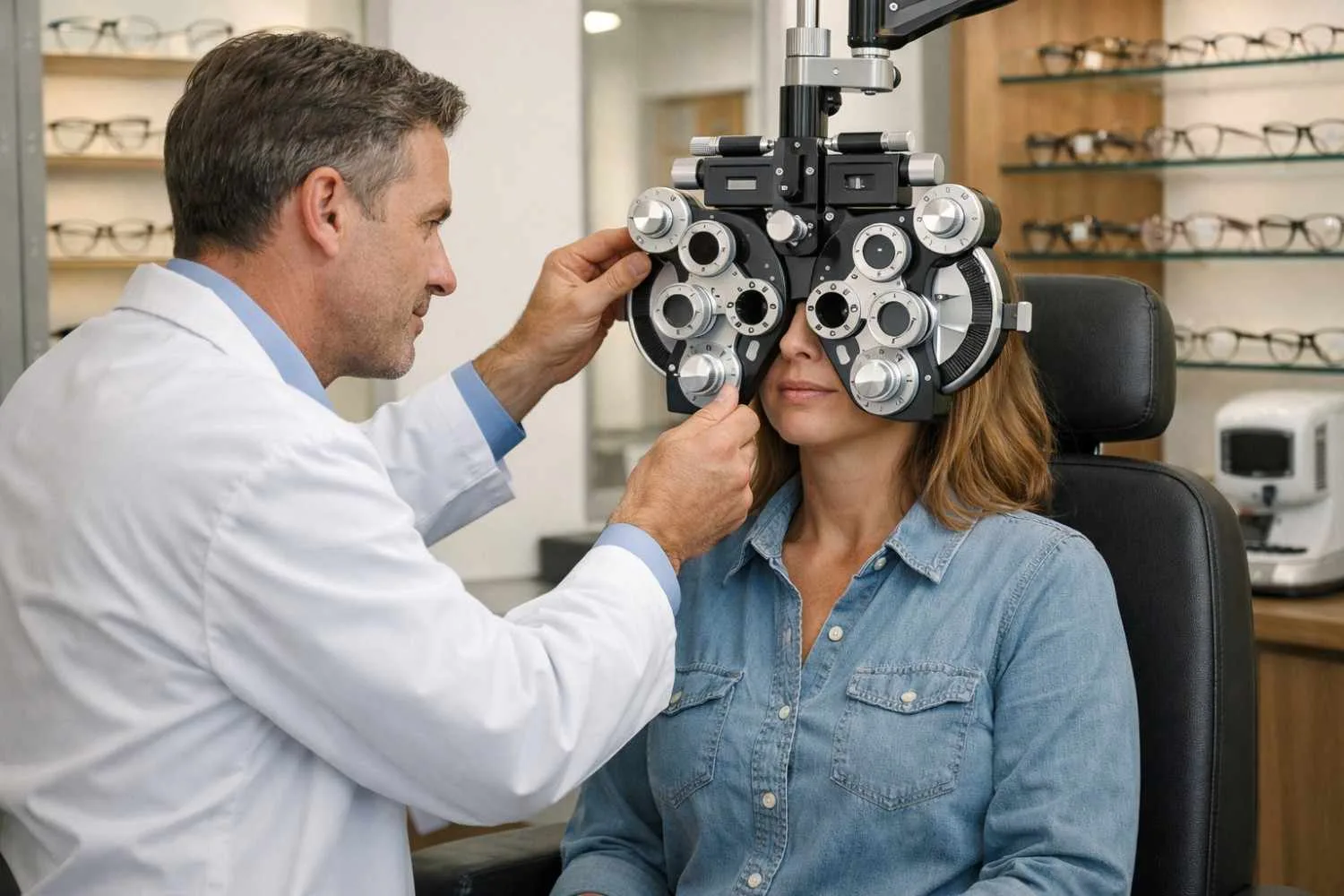
LensCrafters is a retail optical chain owned by EssilorLuxottica, the world's largest eyewear company. The optometrists who practice inside LensCrafters locations are not LensCrafters employees in most cases. They are independently licensed doctors of optometry (ODs) who lease clinical space within the store or work through affiliated management groups like LensCrafters' parent network.
This distinction matters. The optometrist you see at LensCrafters holds the same foundational degree and state license as any other practicing optometrist. However, the clinical environment, available equipment, appointment structure, and scope of practice can vary significantly from what you would experience at an independent or medically focused optometry office.
Education and Licensing Requirements for LensCrafters Optometrists
Every optometrist practicing at a LensCrafters location in Arizona must hold a Doctor of Optometry (OD) degree from an accredited optometry school. This requires a minimum of four years of postgraduate clinical training after completing undergraduate prerequisites in biology, chemistry, and related sciences. According to the American Optometric Association, optometrists complete over 4,000 hours of clinical training before earning their degree.
After graduation, they must pass the National Board of Examiners in Optometry (NBEO) examinations and obtain a state license from the Arizona Board of Optometry. Arizona-licensed optometrists are authorized to perform comprehensive eye exams, prescribe corrective lenses, diagnose many eye conditions, and in most cases prescribe certain topical medications.
So on paper, a LensCrafters optometrist has the same credentials as an optometrist in private practice. The difference is not in the degree. It is in the clinical setting, the time allotted per patient, and the range of diagnostic tools available in the exam room.
How LensCrafters Optometrists Differ from Independent Eye Doctors
The most significant differences between a LensCrafters optometrist and an independent optometrist are structural, not educational.
LensCrafters operates on a retail model. The primary business driver is selling eyewear. The eye exam functions partly as a gateway to frame and lens purchases. This does not mean the exam is fraudulent or careless, but it does mean the clinical environment is designed around efficiency and product conversion rather than extended medical evaluation.
Independent and private-practice optometrists typically control their own schedules, invest in specialized diagnostic equipment, and build long-term patient relationships. They are more likely to offer medical eye care services such as dry eye treatment, management of glaucoma or diabetic eye disease, and coordination with ophthalmologists for surgical referrals.
At a LensCrafters location, the optometrist may rotate between stores, limiting continuity. The exam room may have standard but not advanced diagnostic technology. And the appointment itself is often shorter, sometimes 15 to 20 minutes compared to 30 to 45 minutes at a comprehensive practice.
What Services Do LensCrafters Optometrists Provide?
LensCrafters optometrists offer a defined set of clinical services focused primarily on vision correction and basic eye health screening. Understanding exactly what is included helps you determine whether their exam meets your specific needs.
Routine Eye Exams and Vision Prescriptions
The core service at LensCrafters is the comprehensive eye exam for the purpose of determining a glasses or contact lens prescription. This typically includes visual acuity testing, refraction (the “which is better, one or two?” process), and a basic evaluation of eye health using a slit lamp and ophthalmoscope.
For patients who simply need an updated prescription for glasses or contacts and have no known eye health concerns, this exam covers the essentials. You will leave with a valid prescription that you can use at LensCrafters or any other optical retailer.
Contact Lens Fittings and Follow-Up Care
LensCrafters optometrists also perform contact lens fittings, which involve measuring the curvature of your cornea, evaluating tear film quality, and selecting an appropriate lens type and brand. A contact lens exam is separate from a standard eye exam and usually carries an additional fee.
For straightforward contact lens wearers using standard soft lenses, this service is generally adequate. However, patients who need specialty lenses, such as scleral lenses for keratoconus, multifocal contacts for presbyopia, or rigid gas permeable lenses, may find that a retail setting does not stock the trial lenses or have the fitting expertise required for these more complex prescriptions.
Screening for Eye Conditions and Diseases
During a routine exam, LensCrafters optometrists will screen for common eye conditions including cataracts, glaucoma risk factors, and signs of macular degeneration. Some locations offer retinal imaging for an additional fee, which provides a photograph of the back of the eye.
It is important to understand the difference between screening and management. A LensCrafters optometrist can identify warning signs and refer you to a specialist. They are generally not set up to provide ongoing treatment, monitoring, or medical management of diagnosed eye diseases. If the screening reveals something concerning, you will likely be told to follow up with another provider.
Pros and Cons of Seeing an Optometrist at LensCrafters
No eye care option is universally good or bad. The value of a LensCrafters eye exam depends on your individual situation, expectations, and eye health needs.
Advantages of LensCrafters Eye Care
LensCrafters offers several genuine conveniences that make it appealing for certain patients:
Accessibility. With multiple locations across the Phoenix metro area, including stores in malls and shopping centers, LensCrafters is easy to find and often offers evening and weekend appointments.
Speed. You can typically get an eye exam and walk out with new glasses the same day, sometimes within an hour if your prescription is straightforward and the lenses are in stock.
Insurance acceptance. LensCrafters accepts most major vision insurance plans, including EyeMed (which is owned by the same parent company, EssilorLuxottica), VSP, and others.
One-stop convenience. The exam room is steps away from the frame selection. For patients who want a simple, fast experience focused on getting new glasses, this integration is efficient.
Limitations You Should Know About
The retail model also introduces limitations that are worth weighing honestly:
Shorter appointment times. The exam may feel rushed, particularly if you have questions about symptoms, eye health history, or treatment options. Optometrists working in high-volume retail settings often see more patients per day than those in private practice.
Limited diagnostic equipment. Not all LensCrafters locations have advanced imaging technology such as optical coherence tomography (OCT), visual field analyzers, or corneal topographers. These tools are standard in many comprehensive eye care offices and are essential for detecting and monitoring conditions like glaucoma, macular degeneration, and corneal disease.
Lack of continuity. You may not see the same optometrist at each visit. The doctor who examined you last year may no longer practice at that location. This makes it harder to build a clinical relationship and track changes in your eye health over time.
Retail pressure. While the optometrist's clinical judgment should be independent, the surrounding environment is designed to sell eyewear. Some patients report feeling steered toward purchasing frames and lenses on-site rather than being given a prescription to fill elsewhere, though federal law (the FTC Eyeglass Rule) requires that you receive a copy of your prescription.
Limited medical eye care. If you have dry eye disease, diabetic retinopathy, recurring eye infections, or other conditions requiring ongoing treatment, a LensCrafters optometrist is generally not the right provider for long-term management.
LensCrafters Optometrists vs. Private Practice Optometrists
This is the comparison most patients are really trying to make when they search for whether LensCrafters optometrists are good. Here is how the two models differ across the factors that matter most.
Appointment Time and Patient Experience
Private practice optometrists typically schedule 30 to 45 minutes per patient for a comprehensive exam. This allows time for a thorough health history review, detailed testing, patient education, and questions.
LensCrafters appointments tend to run 15 to 25 minutes. The exam covers the clinical basics, but there is less room for discussion, especially about symptoms that may not be directly related to your glasses prescription.
If you are a healthy adult with stable vision who just needs a prescription update, the shorter appointment may be perfectly fine. If you are a parent bringing a child for their first eye exam, a patient with diabetes, or someone experiencing new symptoms like floaters, flashes, or eye pain, the extra time in a private practice setting can make a meaningful clinical difference.
Continuity of Care and Medical Records
In a private practice, your medical records stay with the practice. Your optometrist reviews your history at each visit, tracks changes in your prescription and eye health, and knows your baseline. This continuity is especially important for patients with progressive conditions or risk factors.
At LensCrafters, records are maintained, but the rotating doctor model means the person reading your chart may have no prior relationship with you. Subtle changes that a familiar provider might catch, such as a slight increase in eye pressure or a new area of retinal thinning, can be easier to miss when every visit starts from scratch.
Scope of Services and Referral Pathways
A comprehensive private practice optometrist in Phoenix can typically offer:
- Full medical eye exams (not just refractive exams)
- Dry eye diagnosis and treatment (including in-office procedures)
- Glaucoma monitoring and co-management
- Diabetic eye exams with detailed retinal evaluation
- Pediatric eye exams with developmental vision assessment
- Direct referral relationships with local ophthalmologists for surgery or advanced treatment
- Coordination with your primary care physician when eye findings relate to systemic health
A LensCrafters optometrist can perform a standard eye exam and refer out for anything beyond that scope. The referral process may be less coordinated, and you may need to find a specialist on your own rather than being guided through a warm handoff.
When a LensCrafters Optometrist Is the Right Choice
LensCrafters is not the wrong choice for everyone. There are specific scenarios where it serves patients well.
Routine Vision Checkups and Prescription Updates
If you are an adult with healthy eyes, no family history of eye disease, and no current symptoms beyond needing a new glasses prescription, a LensCrafters eye exam will likely meet your needs. The optometrist will check your visual acuity, update your prescription, and perform a basic health screening.
This is especially true if you have been seen recently by a comprehensive eye care provider and simply need a prescription renewal between more thorough exams.
Quick Access to Glasses and Contact Lenses
LensCrafters excels at convenience. If you broke your glasses, need a backup pair quickly, or want to browse a large frame selection with immediate availability, the integrated retail and clinical model is genuinely useful. The ability to get an exam and new glasses in a single visit saves time for patients with straightforward needs.
When You May Need More Than a Retail Optometrist
There are situations where a retail eye exam is not sufficient, and recognizing them early can protect your vision long-term.
Ongoing Eye Conditions That Require Specialized Care
If you have been diagnosed with or are at risk for glaucoma, macular degeneration, cataracts, diabetic retinopathy, keratoconus, or chronic dry eye disease, you need a provider who can offer ongoing monitoring and treatment. These conditions require advanced imaging, regular follow-up visits, and sometimes in-office procedures that are not available in a retail optical setting.
According to the National Eye Institute, glaucoma affects more than 3 million Americans, and early detection through comprehensive eye exams with proper diagnostic equipment is critical to preventing irreversible vision loss.
Pediatric Eye Care and Developmental Vision Needs
Children's eye exams require a different approach than adult exams. Young children cannot always articulate what they see, and developmental vision issues like amblyopia (lazy eye), strabismus (eye turn), and convergence insufficiency require specific testing protocols and sometimes vision therapy.
The American Academy of Ophthalmology recommends that children have their first comprehensive eye exam between 6 and 12 months of age, with follow-up exams at age 3 and before starting school. A pediatric-focused or family-oriented eye care practice is better equipped to handle these evaluations than a retail chain.
Parents in Phoenix should look for an optometrist who regularly sees pediatric patients and has the tools and training to assess binocular vision, eye tracking, and visual development, not just visual acuity.
When to See an Ophthalmologist Instead
An ophthalmologist is a medical doctor (MD or DO) who specializes in eye and vision care, including surgery. You should see an ophthalmologist if you need cataract surgery, LASIK evaluation, treatment for retinal detachment, management of advanced glaucoma, or care for any condition that may require surgical intervention.
A good optometrist, whether at LensCrafters or in private practice, will refer you to an ophthalmologist when your condition warrants it. The difference is that a comprehensive optometry practice often has established referral relationships with trusted ophthalmologists and can coordinate your care more seamlessly than a rotating retail provider.
How to Choose the Right Eye Care Provider in Phoenix, AZ
Phoenix has no shortage of eye care options, from retail chains to solo practitioners to multi-specialty clinics. Choosing the right one starts with understanding your own needs.
Questions to Ask Before Booking an Eye Exam
Before scheduling, ask these questions:
- How long is a typical appointment? If the answer is under 20 minutes, the exam may not be thorough enough for patients with complex needs.
- Will I see the same doctor at each visit? Continuity matters for tracking eye health changes.
- What diagnostic equipment is available? Ask specifically about OCT, visual field testing, and retinal imaging.
- Does the practice handle medical eye conditions or only vision prescriptions? This tells you whether the provider can manage problems beyond blurry vision.
- How are referrals handled if I need a specialist? A coordinated referral process is a sign of a well-connected practice.
What to Look for in a Comprehensive Eye Care Practice
The best eye care providers in Phoenix share several characteristics:
They invest in advanced diagnostic technology that goes beyond what is needed for a basic prescription. They take time with each patient, explaining findings and answering questions without rushing. They see patients of all ages, from young children to seniors, and adjust their approach accordingly. They maintain long-term patient relationships and track your eye health history over years, not just visits. And they have direct referral pathways to ophthalmologists and other specialists when more advanced care is needed.
A practice that checks all of these boxes is not just filling prescriptions. It is providing genuine eye health care, the kind that catches problems early, guides you to the right level of treatment, and gives you confidence that your vision is in good hands.
Conclusion
LensCrafters optometrists are licensed, trained professionals who can competently handle routine eye exams and vision prescriptions. But the retail model introduces real limitations in appointment depth, diagnostic capability, continuity of care, and medical scope that matter more as your eye care needs become more complex.
Choosing the right eye care provider is not just about convenience or cost. It is about finding a practice that matches the level of care your eyes actually need, whether that is a simple prescription update or ongoing management of a condition that could affect your vision for life.
At Arizona's Vision Eye Care Center, we provide comprehensive, patient-focused eye care for every member of your family in Phoenix, AZ. From routine exams and vision correction to medical eye care, pediatric evaluations, and coordinated specialist referrals, we are here to help you see clearly and confidently. Schedule your appointment today and experience the difference that thorough, relationship-driven eye care makes.
Frequently Asked Questions
Are LensCrafters eye exams as thorough as private optometrist exams?
LensCrafters eye exams cover the basics of vision correction and general eye health screening. However, private practice optometrists typically spend more time per patient, use more advanced diagnostic equipment, and offer a broader scope of medical eye care services. For patients with complex needs, a private practice exam is usually more thorough.
Do LensCrafters optometrists treat eye diseases?
LensCrafters optometrists can identify signs of eye disease during a screening exam, but they are generally not set up to provide ongoing treatment or management. If a condition like glaucoma, macular degeneration, or diabetic retinopathy is detected, you will typically be referred to another provider for follow-up care.
Can I use my vision insurance at LensCrafters?
Yes. LensCrafters accepts most major vision insurance plans, including EyeMed, VSP, and many employer-sponsored plans. Coverage varies by plan, so check with your insurance provider and the specific LensCrafters location before your appointment to confirm what is covered.
How often should I get an eye exam if I have no vision problems?
The American Optometric Association recommends adults ages 18 to 64 get a comprehensive eye exam at least every two years, and annually after age 65. Children should have their first exam by age one, again at age three, and before starting school. Patients with risk factors like diabetes or a family history of eye disease should be seen annually regardless of age.
What is the difference between an optometrist and an ophthalmologist?
An optometrist (OD) is a doctor of optometry trained to perform eye exams, prescribe corrective lenses, diagnose eye conditions, and in many states prescribe certain medications. An ophthalmologist (MD or DO) is a medical doctor who can do everything an optometrist does plus perform eye surgery and manage complex medical eye diseases. Your optometrist can help determine when an ophthalmologist referral is appropriate.
Is it better to see an independent optometrist or one at a retail store?
It depends on your needs. Retail optometrists are convenient for quick prescription updates and same-day glasses. Independent optometrists typically offer longer appointments, more advanced diagnostic tools, continuity of care, and a wider range of medical eye services. For patients with ongoing conditions, children, or anyone wanting a long-term eye care relationship, an independent practice is usually the better choice.
How do I know if I need a referral to an ophthalmologist?
You may need an ophthalmologist if you have been diagnosed with a condition requiring surgery (such as cataracts or retinal detachment), have advanced glaucoma, experience sudden vision loss, or need specialized treatment beyond what an optometrist can provide. A comprehensive optometrist will evaluate your condition and coordinate a referral when the situation calls for a higher level of care.

Dr. Page is a licensed Doctor of Optometry, and a long time resident of Ahwatukee Arizona. He graduated from the New England College of Optometry in Boston in 1990. He moved to Phoenix to serve the community in both his clinic and by becoming a community activist.
He is deeply involved in supporting the local athletic teams, the arts, pet adoption and children. He is a charter member of the Chamber of Commerce.
After watching his father lose vision in his right eye he dedicated his career to finding a way to stopping eyes from getting worse. He is the founder of the Invisalens eye retainer and a best selling author for his book: Freedom! The Smart Parents Guide to Helping Your Child See a Better Life.
He specializes in helping his patients see better with eyeglasses, contact lenses, nutrition and genetics.
Words can't describe what our eyes bring to life!